
Who Qualifies for Medical Weight Loss Programs?
Key Takeaways
- Eligibility is personalized. Qualification depends on BMI, health history, and weight challenges.
- Not just for obesity. Individuals with metabolic concerns or weight-related conditions may qualify.
- Clinical evaluation matters. Physicians assess underlying factors before recommending treatment.
- Beyond dieting. Medical weight loss is ideal when traditional methods are not effective.
- Structured care improves outcomes. Personalized programs support long-term success.
- Care in Georgia. Prestige Medical Group provides physician-supervised weight loss programs tailored to individual needs.
Request an Appointment(opens in a new tab)
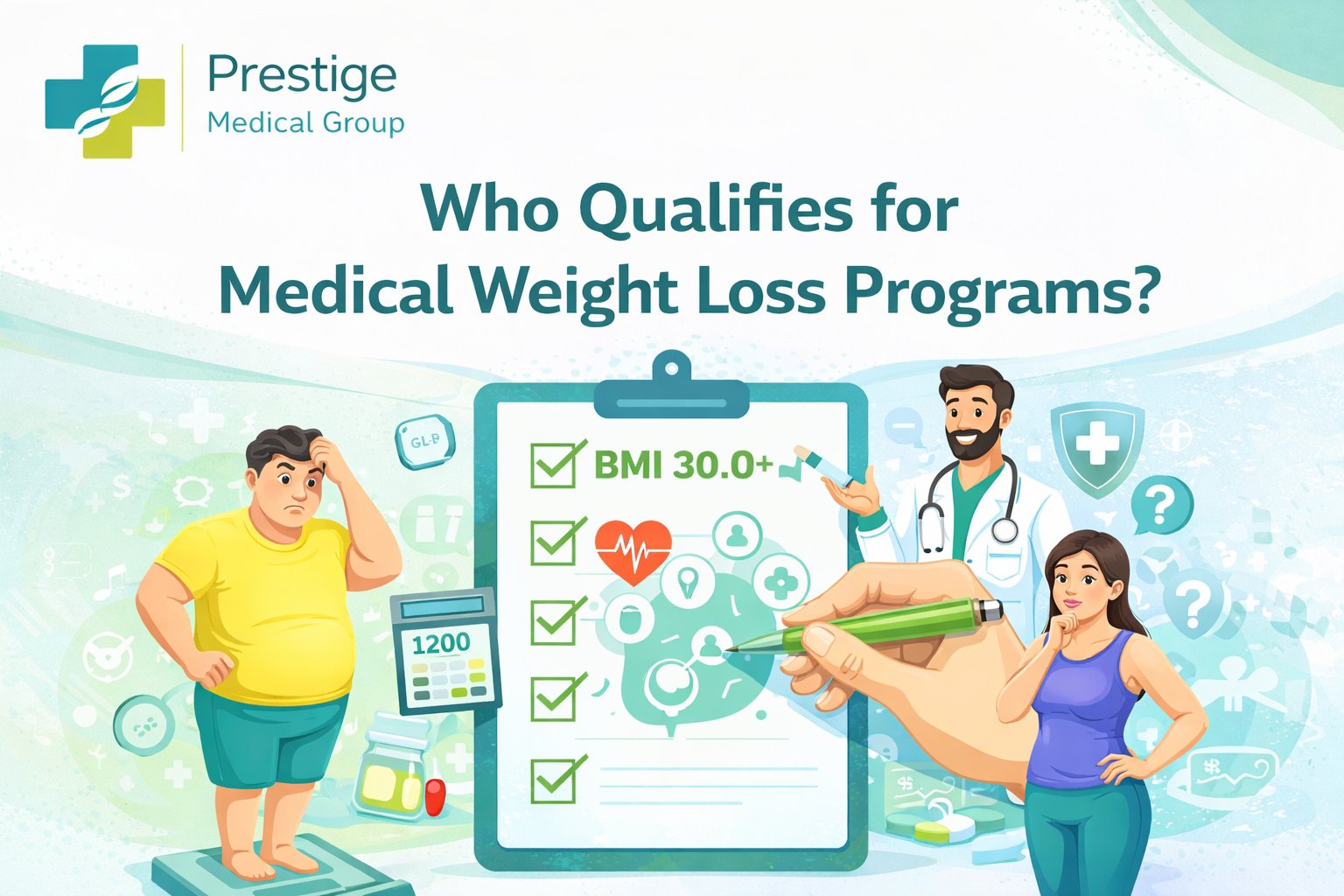
What Determines Eligibility for Medical Weight Loss?
Medical weight loss eligibility is determined through a comprehensive clinical evaluation rather than a one-size-fits-all standard.
This process builds on understanding what medical weight loss is(opens in a new tab) and how it connects to doctor-backed programs(opens in a new tab).
Instead of focusing only on weight, physicians evaluate overall health, metabolic factors, and previous weight loss attempts.
Common Qualification Criteria
While eligibility varies, there are several common factors physicians consider when recommending medical weight loss.
Understanding how programs work(opens in a new tab) helps clarify why these criteria are important.
- Body Mass Index (BMI). Typically in the overweight or obese range.
- Weight-related conditions. Diabetes, hypertension, or metabolic syndrome.
- Difficulty losing weight. Limited success with diet and exercise.
- Hormonal factors. Metabolic resistance or imbalance.
- Weight regain history. Repeated cycles of losing and gaining weight.
- Lifestyle challenges. Time constraints or physical limitations.
The CDC(opens in a new tab) highlights the health risks associated with obesity and the need for structured care.
When Medical Weight Loss Is Recommended
Medical weight loss is often recommended when traditional approaches are not delivering sustainable results.
This is closely related to understanding weight loss vs dieting(opens in a new tab) and why beyond diet(opens in a new tab) approaches are often necessary.
- Plateaus. When weight loss stalls despite effort.
- Health risks. Presence of chronic conditions.
- Metabolic challenges. Difficulty regulating appetite or energy use.
- Need for structure. Requires guided support and accountability.
Role of Medications in Eligibility
Some patients may qualify for additional support through medication as part of their treatment plan.
This includes options like GLP-1 medications(opens in a new tab), which are often introduced based on clinical need.
- Appetite regulation. Helps control hunger signals.
- Metabolic support. Improves how the body processes energy.
- Personalized use. Prescribed based on individual evaluation.
Research from the NIH(opens in a new tab) supports medication use in structured programs.
How Safety Factors Into Qualification
Safety is a key part of determining eligibility for medical weight loss programs.
Patients are evaluated to ensure treatments align with safety factors(opens in a new tab) and individual health conditions.
- Medical history review. Identifies potential risks.
- Medication compatibility. Ensures safe treatment options.
- Ongoing monitoring. Tracks response to treatment.
The Mayo Clinic(opens in a new tab) emphasizes supervised care for improved safety.
What If You’re Not Sure You Qualify?
Many people are unsure whether they meet the criteria for medical weight loss—and that’s completely normal.
Understanding what to expect(opens in a new tab) and aligning with safe timelines(opens in a new tab) can provide clarity.
- Consultation helps. A physician can evaluate your situation.
- No assumptions needed. Eligibility is personalized.
- Guided decisions. Recommendations are based on clinical data.
Why Medical Weight Loss Is Different
Medical weight loss stands apart because it focuses on individualized care and underlying health factors.
This difference is supported by weight loss myths(opens in a new tab) and medical truth(opens in a new tab).
- Biological focus. Addresses metabolism and hormones.
- Clinical oversight. Improves safety and outcomes.
- Personalized care. Tailored treatment plans.
- Long-term success. Sustainable results.
Why Trust Prestige Medical Group?
Prestige Medical Group offers physician-supervised weight loss programs designed around each patient’s unique health profile.
The practice combines clinical expertise with personalized care strategies to support long-term success.
This ensures safe, effective, and sustainable outcomes.
Start Your Physician-Supervised Weight Loss Journey
If you’re unsure whether you qualify for medical weight loss, you’re not alone—many people have the same question before starting.
The important thing to remember is that eligibility isn’t about meeting a single number, but about understanding what your body needs.
With the right guidance, you can gain clarity and move forward with confidence.
At Prestige Medical Group, you receive a personalized evaluation and physician-guided plan designed to help you achieve safe, lasting results.
Start your Journey(opens in a new tab)
Frequently Asked Questions
Do I need to be obese to qualify?
No, eligibility depends on overall health and weight-related factors.
Can I qualify if diet hasn’t worked?
Yes, many patients qualify after unsuccessful dieting attempts.
Are medications required?
Not always—treatment plans are personalized.
How do I know if I qualify?
A consultation with a physician provides the best answer.
Is it safe?
Yes, when supervised by a healthcare provider.
