
How Medical Weight Loss Programs Actually Work
Key Takeaways
- Structured clinical process. Medical weight loss follows a step-by-step, physician-guided system.
- Personalized treatment plans. Programs are tailored using lab results, history, and goals.
- Medication + Lifestyle approach. Combines GLP-1 medications, nutrition, and behavioral support.
- Ongoing monitoring. Regular follow-ups ensure safe and effective progress.
- Adaptive treatment. Plans evolve based on patient response.
- Care in Georgia. Prestige Medical Group delivers physician-supervised weight loss programs for long-term success.
Request an Appointment(opens in a new tab)
What Is the Process Behind Medical Weight Loss?
Medical weight loss programs follow a structured clinical process designed to evaluate, treat, and monitor weight-related health factors.
This approach builds on the foundation of what medical weight loss is(opens in a new tab) and connects directly to doctor-backed programs(opens in a new tab) that provide structured care.
Unlike traditional approaches, this process is designed to address the root causes of weight gain rather than focusing only on calorie reduction.
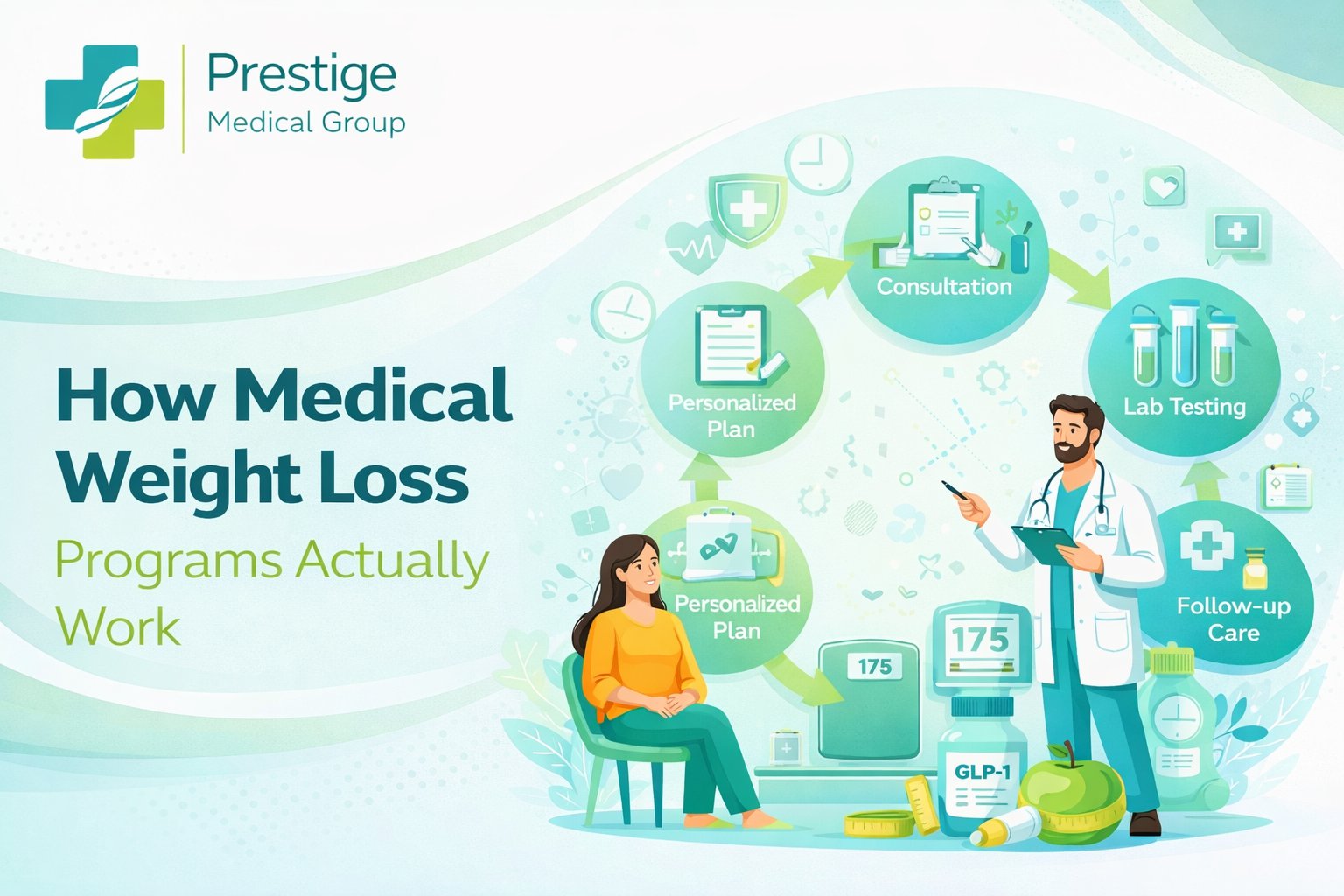
Step-by-Step: How Medical Weight Loss Works
Each program follows a defined sequence of steps that ensures both safety and effectiveness.
Understanding what to expect(opens in a new tab) and how progress aligns with safe timelines(opens in a new tab) can help patients feel more confident.
- Initial consultation. Comprehensive review of medical history, lifestyle, and weight patterns.
- Lab testing. Identifies metabolic, hormonal, and glucose-related factors.
- Body composition analysis. Measures fat, muscle, and metabolic rate.
- Personalized plan creation. Tailored approach based on clinical findings.
- Medication integration. May include GLP-1 medications(opens in a new tab) when appropriate.
- Nutrition strategy. Structured dietary planning aligned with CDC guidance(opens in a new tab).
- Regular follow-ups. Ongoing monitoring and adjustments.
- Continuous optimization. Treatment evolves with patient progress.
Research from the NIDDK(opens in a new tab) shows structured programs improve long-term outcomes.
How Medications and Lifestyle Work Together
Medical weight loss programs combine medication and lifestyle strategies to create sustainable results.
This integrated approach helps explain weight loss vs dieting(opens in a new tab) and why combining both methods leads to better outcomes.
- Appetite regulation. Medications help control hunger signals.
- Metabolic support. Improves how the body processes energy.
- Behavioral change. Builds long-term habits.
- Consistency. Encourages sustained progress over time.
According to NIH research(opens in a new tab), combining medication with lifestyle changes improves weight loss outcomes.
Who This Process Is Designed For
Medical weight loss programs are designed for individuals who need structured support beyond traditional approaches.
Understanding who qualifies(opens in a new tab) and reviewing safety factors(opens in a new tab) helps determine suitability.
- Chronic weight challenges. Difficulty losing weight through diet alone.
- Metabolic conditions. Diabetes or hormonal imbalance.
- Weight regain history. Difficulty maintaining results.
- Lifestyle constraints. Time or physical limitations.
The CDC(opens in a new tab) emphasizes structured intervention for long-term health.
Why Medical Weight Loss Is More Effective
Medical weight loss programs are more effective because they address the biological drivers of weight gain.
This is supported by weight loss myths(opens in a new tab), medical truth(opens in a new tab), and beyond diet(opens in a new tab).
- Biological focus. Targets hormones and metabolism.
- Clinical oversight. Improves safety and consistency.
- Evidence-based. Supported by research.
- Personalized care. Tailored strategies.
- Long-term results. Sustainable outcomes.
Why Trust Prestige Medical Group?
Prestige Medical Group delivers physician-supervised weight loss through a structured and patient-centered approach.
The practice integrates clinical expertise, advanced treatments, and personalized care to support long-term results.
This ensures safe, effective, and sustainable outcomes for every patient.
Start Your Physician-Supervised Weight Loss Journey
Starting a weight loss journey can feel uncertain, especially when past efforts haven’t delivered lasting results.
That uncertainty often comes from not having a clear, structured plan that aligns with your body’s needs.
Medical weight loss provides that structure—giving you a guided, supportive path forward.
At Prestige Medical Group, you receive a personalized, physician-guided program designed to help you achieve safe, lasting results with confidence.
Start your Journey(opens in a new tab)
Frequently Asked Questions
How do medical weight loss programs work?
They follow a structured process including evaluation, personalized planning, and ongoing monitoring.
Are medications always required?
No, treatment plans are personalized and may or may not include medication.
How long does the process take?
Results vary, but most patients see progress within weeks.
Is the program safe?
Yes, physician supervision ensures safety and effectiveness.
Who should consider this program?
Individuals struggling with weight loss or related health conditions.
