
Medical Weight Loss vs Dieting: What Works Better?
Key Takeaways
- Different approaches. Dieting focuses on calorie restriction, while medical weight loss addresses biological and metabolic factors.
- Short-term vs long-term. Dieting often leads to temporary results, while medical weight loss focuses on sustainability.
- Clinical support matters. Physician supervision improves safety and effectiveness.
- Personalization. Medical programs are tailored, unlike generic diets.
- Better outcomes. Structured programs show higher long-term success rates.
- Care in Georgia. Prestige Medical Group provides physician-guided weight loss programs designed for lasting results.
Request an Appointment(opens in a new tab)
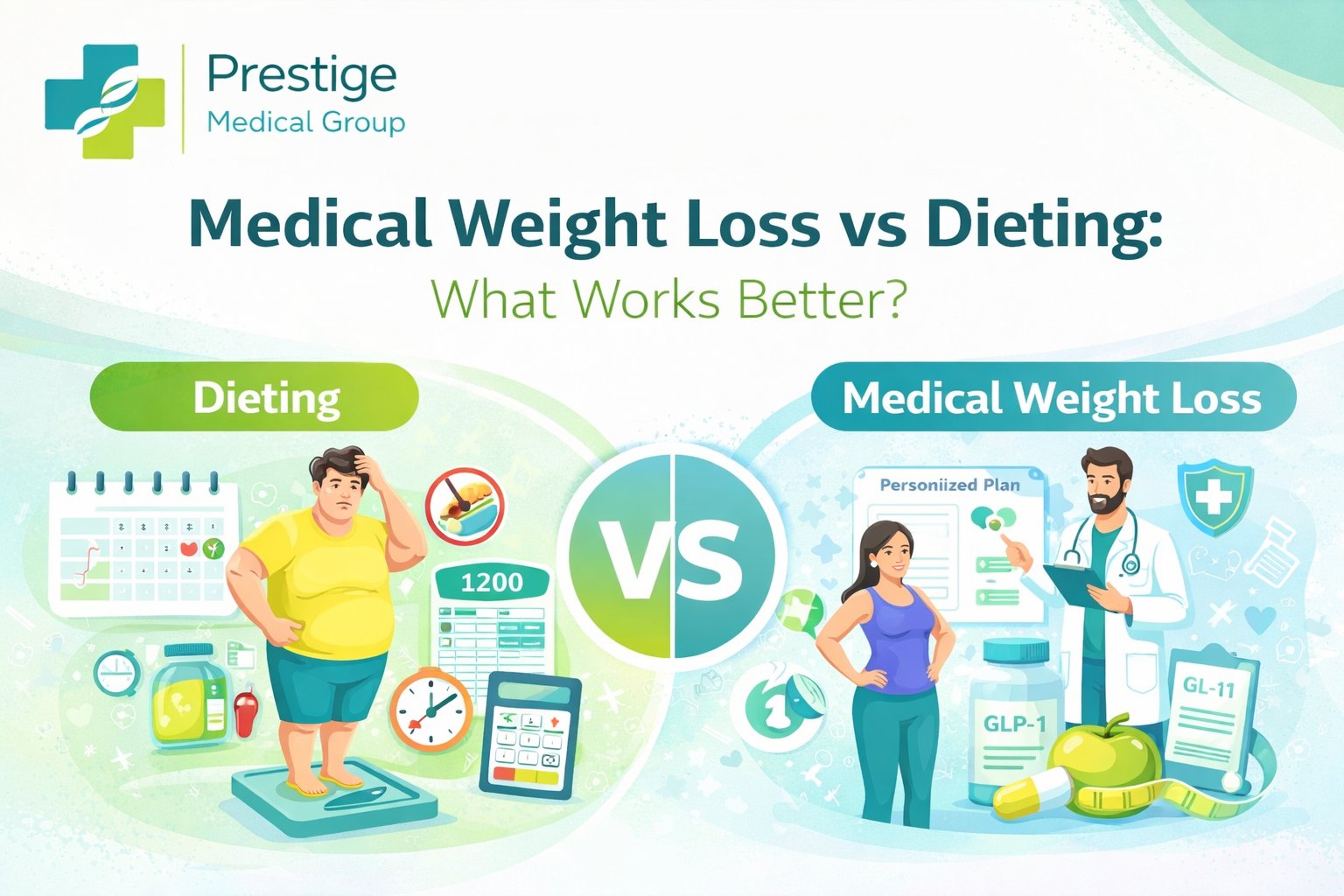
What Is the Difference Between Medical Weight Loss and Dieting?
Medical weight loss and traditional dieting may seem similar, but they take fundamentally different approaches to achieving results.
Understanding what medical weight loss is(opens in a new tab) helps clarify how it connects to doctor-backed programs(opens in a new tab) designed for long-term outcomes.
Dieting typically focuses on reducing calorie intake, while medical weight loss evaluates metabolism, hormones, and health conditions that influence weight.
How Dieting Works
Traditional dieting is often based on calorie restriction and general guidelines.
While it can lead to short-term results, it does not always address weight loss beyond diet(opens in a new tab), which is why many people experience plateaus or regain weight.
- Calorie restriction. Focus on eating less to lose weight.
- Generic plans. One-size-fits-all strategies.
- Short-term focus. Often lacks sustainability.
- Limited support. Minimal clinical guidance.
The CDC(opens in a new tab) emphasizes that sustainable weight loss requires long-term behavior change.
How Medical Weight Loss Works
Medical weight loss programs use a structured, clinical approach to address the root causes of weight gain.
This includes understanding how programs work(opens in a new tab) and what to expect(opens in a new tab) during treatment.
- Clinical evaluation. Identifies metabolic and hormonal factors.
- Personalized plans. Tailored to individual needs.
- Medication support. May include GLP-1 medications(opens in a new tab).
- Ongoing monitoring. Adjustments based on progress.
- Long-term strategy. Focus on sustainable outcomes.
Research from the NIDDK(opens in a new tab) supports structured medical programs for long-term success.
Which One Works Better?
The effectiveness of weight loss methods depends on the approach and individual needs.
Medical weight loss often delivers better results because it addresses underlying factors, as supported by medical truth(opens in a new tab) and weight loss myths(opens in a new tab).
- Higher success rates. Structured programs improve outcomes.
- Reduced regain. Focus on sustainability.
- Better health outcomes. Improves metabolic markers.
- Personalized care. Tailored treatment plans.
Who Should Choose Medical Weight Loss?
Medical weight loss is ideal for individuals who need more than traditional dieting.
Understanding who qualifies(opens in a new tab) and aligning with safe timelines(opens in a new tab) helps guide decision-making.
- Chronic weight challenges. Difficulty losing weight through diet.
- Health conditions. Diabetes, hypertension, or metabolic issues.
- Weight regain history. Difficulty maintaining results.
- Need for structure. Requires guided support.
The CDC(opens in a new tab) highlights risks associated with obesity.
Why Medical Weight Loss Is Different
Medical weight loss provides a comprehensive approach that goes beyond traditional dieting.
This difference is reinforced by beyond diet(opens in a new tab) and supported by clinical research.
- Biological focus. Targets hormones and metabolism.
- Clinical oversight. Improves safety and results.
- Evidence-based care. Supported by research.
- Long-term success. Sustainable outcomes.
Why Trust Prestige Medical Group?
Prestige Medical Group offers physician-supervised weight loss programs built on clinical expertise and personalized care.
The practice integrates advanced treatments and lifestyle strategies to support long-term success.
This approach ensures safe, effective, and sustainable outcomes.
Start Your Physician-Supervised Weight Loss Journey
If you’ve tried dieting multiple times and struggled to maintain results, it can feel frustrating and discouraging.
That experience is common, and it often reflects the limitations of one-size-fits-all approaches.
With medical weight loss, you gain access to a structured plan designed specifically for your body and health.
At Prestige Medical Group, you receive a personalized, physician-guided program that helps you move beyond short-term solutions and achieve lasting results.
Start your Journey(opens in a new tab)
Frequently Asked Questions
Is medical weight loss better than dieting?
It often provides more sustainable results due to clinical supervision and personalization.
Can dieting still work?
Yes, but results are often short-term without structured support.
Do medical programs use medication?
Some plans include medication, depending on individual needs.
Who should consider medical weight loss?
Individuals struggling with weight loss or related health conditions.
How quickly can I see results?
Most patients begin seeing progress within weeks.
