
How Fast Can You Lose Weight Safely? A Medical Perspective
Key Takeaways
- Safe weight loss is gradual. Sustainable results come from steady, clinically guided progress—not rapid changes.
- Speed varies by individual. Metabolism, health conditions, and treatment plans influence results.
- Medical supervision improves outcomes. Physician-guided programs ensure both safety and effectiveness.
- Rapid weight loss has risks. Extreme dieting can lead to health complications and weight regain.
- Consistency matters most. Long-term success depends on sustainable habits and structured care.
Request an Appointment(opens in a new tab)
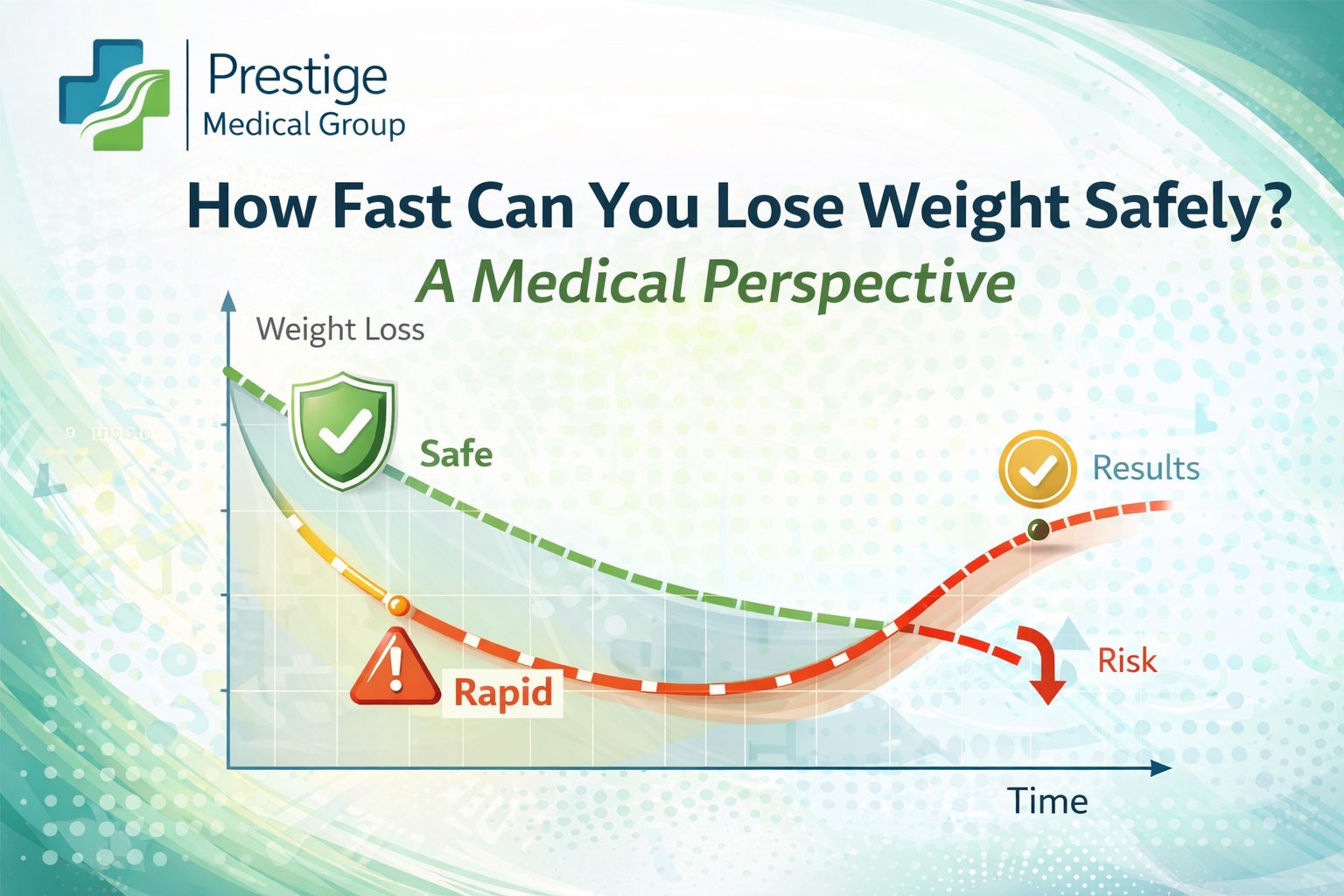
What Is Considered Safe Weight Loss?
Safe weight loss focuses on gradual, sustainable progress rather than rapid changes that may be difficult to maintain.
Understanding doctor-backed programs(opens in a new tab) helps explain how structured care supports long-term results.
According to CDC guidance(opens in a new tab), steady weight loss improves overall health and reduces the risk of complications.
- Gradual progress. Focus on consistent, manageable changes.
- Metabolic stability. Supports long-term weight regulation.
- Reduced risk. Minimizes complications from extreme dieting.
- Sustainable habits. Builds routines that last beyond the program.
Why Rapid Weight Loss Can Be Risky
While quick results may seem appealing, rapid weight loss often comes with risks and long-term challenges.
This is closely related to weight loss vs dieting(opens in a new tab) and why unsupervised approaches can lead to setbacks.
- Muscle loss. Rapid weight loss may reduce lean muscle mass.
- Metabolic slowdown. The body adapts by conserving energy.
- Nutrient deficiencies. Extreme diets may lack essential nutrients.
- Weight regain. Unsustainable methods often lead to rebound weight gain.
The NIDDK(opens in a new tab) highlights the importance of gradual, structured weight loss.
How Medical Weight Loss Improves Results
Medical weight loss programs are designed to balance effectiveness with safety through structured, physician-guided care.
This includes understanding how programs work(opens in a new tab) and what to expect(opens in a new tab) during treatment.
- Personalized plans. Tailored to individual health and goals.
- Medication support. May include GLP-1 medications(opens in a new tab).
- Ongoing monitoring. Ensures safe and consistent progress.
- Adaptive approach. Adjusts based on patient response.
Research from the NIH(opens in a new tab) supports structured medical programs for improved outcomes.
What Affects How Fast You Lose Weight?
The rate of weight loss varies from person to person based on multiple factors.
Understanding who qualifies(opens in a new tab) for treatment helps explain these variations.
- Metabolism. Individual metabolic rate plays a key role.
- Health conditions. Diabetes or hormonal imbalances can impact progress.
- Treatment plan. Personalized strategies influence outcomes.
- Consistency. Adherence to the program affects results.
The CDC(opens in a new tab) highlights how individual health factors influence weight management.
Setting Realistic Expectations
Setting realistic expectations is one of the most important parts of a successful weight loss journey.
This aligns with understanding safety factors(opens in a new tab) and long-term planning.
- Consistency over speed. Steady progress leads to lasting results.
- Health improvements. Even modest weight loss improves overall health.
- Long-term focus. Sustainable habits matter more than quick fixes.
Why Medical Weight Loss Is Different
Medical weight loss focuses on long-term success rather than short-term results.
This is supported by weight loss myths(opens in a new tab), medical truth(opens in a new tab), and beyond diet(opens in a new tab).
- Biological focus. Addresses metabolism and hormones.
- Clinical oversight. Improves safety and outcomes.
- Evidence-based care. Supported by research.
- Sustainable success. Focus on long-term results.
Why Trust Prestige Medical Group?
Prestige Medical Group provides physician-supervised weight loss programs designed for safe and effective outcomes.
The practice combines clinical expertise with personalized care strategies to support long-term success.
This ensures sustainable results tailored to each patient.
Start Your Physician-Supervised Weight Loss Journey
If you’re wondering how quickly you can lose weight, it’s completely natural to want fast results—especially if you’ve been struggling for a while.
But lasting success isn’t about speed—it’s about finding an approach that works with your body and supports your long-term health.
With the right medical guidance, you can move forward with clarity, knowing your progress is both safe and sustainable.
At Prestige Medical Group, you receive a personalized, physician-guided program designed to help you achieve steady, lasting results—so you can move forward with confidence. Start your Journey(opens in a new tab)
Frequently Asked Questions
How fast can I lose weight safely?
Safe weight loss is typically gradual and varies by individual.
Is rapid weight loss dangerous?
It can lead to health risks and is often not sustainable.
Do medical programs speed up results?
They improve efficiency while maintaining safety.
What affects my progress?
Metabolism, health conditions, and consistency all play a role.
How soon will I see results?
Most patients begin seeing progress within weeks.
