
What to Expect in a Medical Weight Loss Program: A Step-by-Step Guide
Key Takeaways
- Structured process. Medical weight loss follows a step-by-step, physician-guided approach.
- Personalized care. Each plan is tailored based on health, goals, and metabolism.
- Ongoing monitoring. Regular follow-ups ensure safe and effective progress.
- Medication support. Treatments like GLP-1 may be included when appropriate.
- Long-term focus. Programs are designed for sustainable results, not quick fixes.
- Care in Georgia. Prestige Medical Group offers physician-supervised programs for lasting success.
Request an Appointment(opens in a new tab)
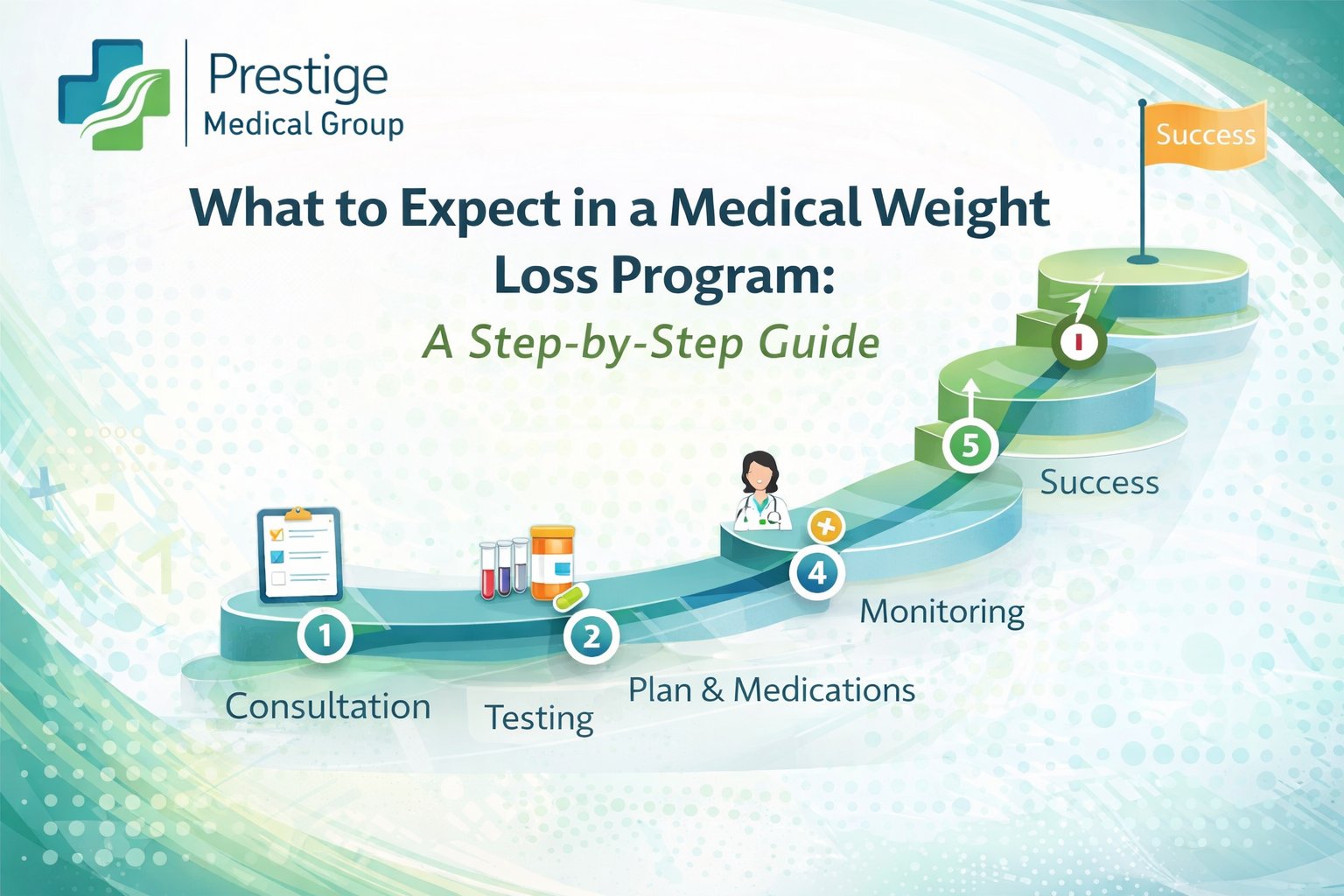
What Happens During a Medical Weight Loss Program?
A medical weight loss program is designed to guide patients through a structured and clinically supervised process.
Understanding doctor-backed programs(opens in a new tab) helps clarify how this approach differs from traditional methods.
Each step is designed to evaluate, treat, and monitor weight loss in a safe and sustainable way.
Step 1: Initial Consultation and Evaluation
The process begins with a comprehensive consultation to understand your health, lifestyle, and goals.
This builds on what medical weight loss is(opens in a new tab) and how it applies to your individual needs.
- Medical history review. Identifies underlying conditions.
- Lifestyle assessment. Evaluates diet, activity, and habits.
- Goal setting. Defines realistic expectations.
Step 2: Diagnostic Testing and Analysis
After the consultation, diagnostic testing helps identify the biological factors affecting weight.
This aligns with how programs work(opens in a new tab) in clinical settings.
- Lab testing. Evaluates hormones and metabolism.
- Body composition. Measures fat and muscle balance.
- Metabolic insights. Identifies underlying challenges.
The NIDDK(opens in a new tab) highlights the importance of medical evaluation in weight management.
Step 3: Personalized Treatment Plan
Based on evaluation results, a personalized treatment plan is developed.
This step often includes options like GLP-1 medications(opens in a new tab) when clinically appropriate.
- Nutrition strategy. Tailored dietary guidance.
- Medication support. If needed for appetite or metabolism.
- Lifestyle adjustments. Sustainable habit changes.
Research from the NIH(opens in a new tab) supports personalized treatment for improved outcomes.
Step 4: Ongoing Monitoring and Adjustments
Medical weight loss is not a one-time plan—it evolves based on your progress.
This process helps ensure alignment with safe timelines(opens in a new tab) and long-term success.
- Regular check-ins. Tracks progress and response.
- Plan adjustments. Optimizes results over time.
- Support system. Provides accountability and guidance.
Step 5: Long-Term Maintenance and Success
The final phase focuses on maintaining results and preventing weight regain.
This reinforces the difference between medical vs dieting(opens in a new tab) approaches.
- Habit reinforcement. Builds sustainable routines.
- Ongoing support. Continued guidance as needed.
- Prevention focus. Reduces risk of weight regain.
The CDC(opens in a new tab) emphasizes long-term behavior change.
Who This Program Is Designed For
Medical weight loss programs are ideal for individuals who need structured support beyond traditional methods.
Understanding who qualifies(opens in a new tab) and reviewing safety factors(opens in a new tab) helps determine suitability.
- Weight challenges. Difficulty losing weight through diet.
- Health conditions. Metabolic or chronic issues.
- Need for structure. Requires guided support.
Why Medical Weight Loss Is Different
Medical weight loss provides a structured, evidence-based approach to long-term results.
This is supported by weight loss myths(opens in a new tab), medical truth(opens in a new tab), and beyond diet(opens in a new tab).
- Biological focus. Targets root causes.
- Clinical oversight. Improves safety.
- Personalized care. Tailored strategies.
- Sustainable success. Long-term outcomes.
Why Trust Prestige Medical Group?
Prestige Medical Group provides physician-supervised weight loss programs designed around each patient’s unique needs.
The practice combines clinical expertise, advanced treatments, and personalized care strategies to support long-term success.
This ensures safe, effective, and sustainable results.
Start Your Physician-Supervised Weight Loss Journey
Starting something new—especially when it comes to your health—can feel uncertain.
Not knowing what to expect often makes it harder to take the first step.
With a structured medical weight loss program, you gain clarity, guidance, and support at every stage of your journey.
At Prestige Medical Group, you receive a personalized, physician-guided program designed to help you move forward with confidence and achieve lasting results.
Start your Journey(opens in a new tab)
Frequently Asked Questions
What happens during the first visit?
It includes consultation, evaluation, and goal setting.
Are lab tests required?
Yes, they help identify underlying factors.
Will I need medication?
Not always—it depends on your personalized plan.
How often are follow-ups?
Regularly scheduled to monitor progress.
Is the program long-term?
Yes, it focuses on sustainable results.
