
Menopause Symptoms and Treatment: When to Seek Help
Key Takeaways
• Menopause is a natural transition: Hormonal changes can impact physical and emotional well-being.
• Symptoms vary in intensity: Hot flashes, sleep issues, and mood changes are common.
• Perimenopause can begin earlier: Symptoms may appear years before menopause.
• Treatment is personalized: Hormone therapy and lifestyle changes can improve quality of life.
• Early care helps manage symptoms: Timely support reduces long-term health risks.
Start Your Journey(opens in a new tab)
Understanding Menopause and Perimenopause
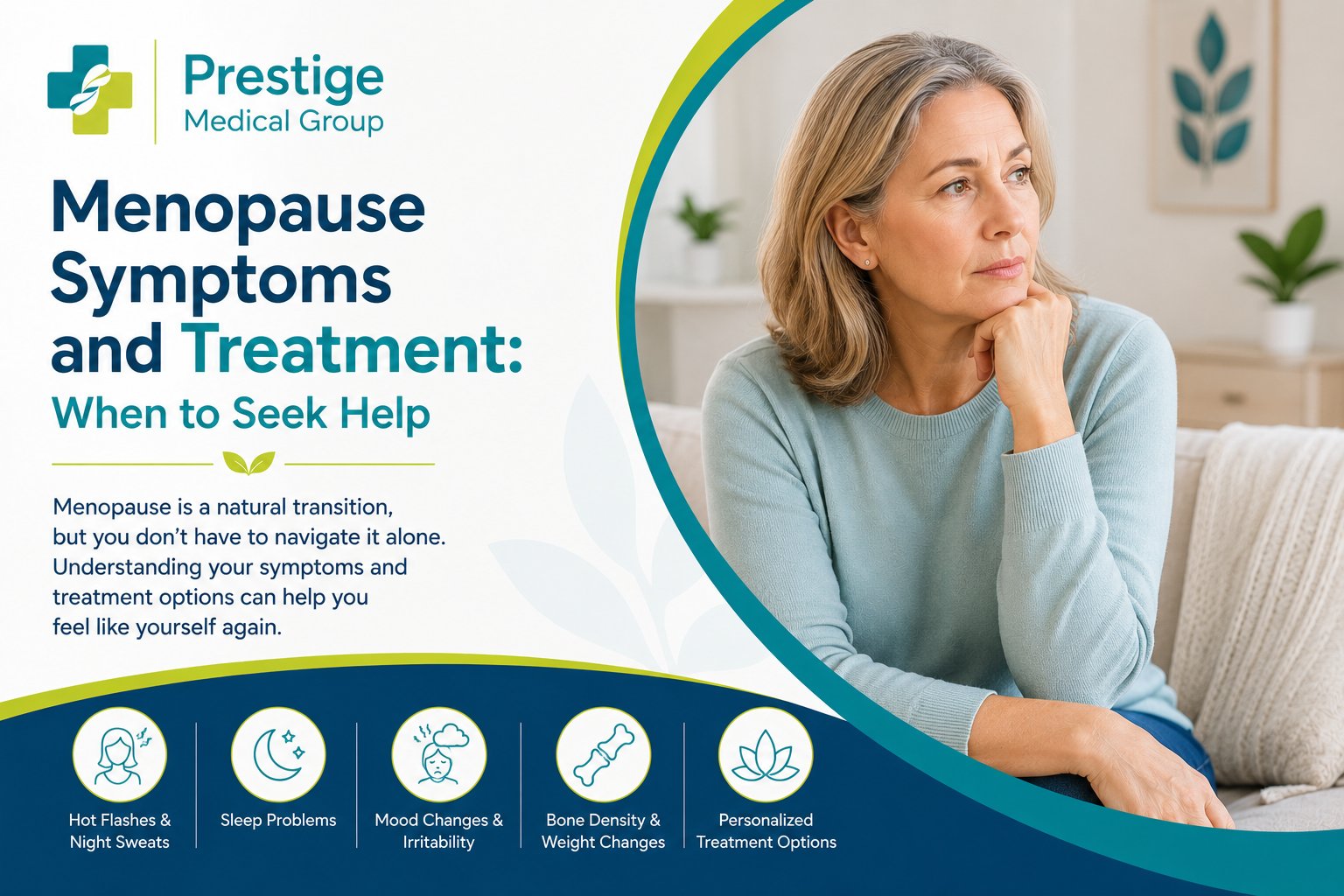
Menopause marks the end of a woman’s reproductive years and typically occurs between the ages of 45 and 55. However, the transition phase known as perimenopause can begin several years earlier, bringing gradual hormonal shifts that affect the body in different ways. These changes primarily involve declining estrogen and progesterone levels, which influence multiple systems including metabolism, mood, and sleep.
Many women begin by understanding when to see a women’s health specialist(opens in a new tab) to determine when symptoms require medical evaluation.
Common Menopause Symptoms
Hot Flashes and Night Sweats
Hot flashes are one of the most recognized symptoms of menopause, often described as sudden waves of heat accompanied by sweating and flushing. Night sweats can disrupt sleep, leading to fatigue and reduced energy levels during the day.
Sleep Disturbances
Hormonal changes can interfere with sleep patterns, making it difficult to fall asleep or stay asleep. Poor sleep can contribute to irritability, difficulty concentrating, and long-term health concerns.
Mood Changes and Emotional Health
Many women experience mood swings, anxiety, or depressive symptoms during menopause. These emotional changes are often linked to hormonal fluctuations and can significantly impact daily life.
Weight Gain and Metabolic Changes
Slower metabolism and hormonal shifts can lead to weight gain, particularly around the abdomen. These changes may also increase the risk of metabolic conditions over time.
Addressing these concerns through medical weight loss programs(opens in a new tab) can support overall health and improve outcomes.
When Should You Seek Treatment?
While menopause is a natural process, symptoms should not be ignored if they begin to interfere with daily life, work, or overall well-being. Persistent fatigue, severe hot flashes, or emotional changes are strong indicators that medical support may be beneficial.
Women often explore common women’s health symptoms(opens in a new tab) to better understand how menopause may be affecting their health.
Treatment Options for Menopause
Hormone Therapy
Hormone therapy is one of the most effective ways to manage menopause symptoms by restoring hormone levels. Through hormone therapy services(opens in a new tab), providers can create personalized treatment plans tailored to your symptoms and health history.
Lifestyle Modifications
Diet, exercise, and stress management can significantly reduce the severity of symptoms. Maintaining a healthy lifestyle supports overall well-being and complements medical treatment.
Comprehensive Care Approach
Managing menopause often requires a coordinated approach involving primary care services(opens in a new tab) to monitor overall health and address related conditions.
Menopause Care Across North Georgia
Access to care across locations such as Roswell(opens in a new tab), Canton(opens in a new tab), Jasper(opens in a new tab), and Rome(opens in a new tab) ensures women can receive consistent and accessible support throughout this stage.
As health needs evolve with age, integrating care with geriatric care services(opens in a new tab) helps maintain long-term wellness.
Why Early Management Matters
Managing menopause symptoms early can reduce the risk of complications such as bone density loss, cardiovascular issues, and metabolic disorders. Proactive care helps improve both quality of life and long-term health outcomes.
Seeking care through a women’s health specialist near you(opens in a new tab) ensures a personalized approach to treatment.
Take the Next Step Toward Better Health
If menopause symptoms are affecting your daily life, seeking care can help you regain balance and improve your overall well-being.
Explore your options for women’s health care near you(opens in a new tab) and take the next step toward better health.
Start Your Journey(opens in a new tab)
Frequently Asked Questions
What are the first signs of menopause?
Early signs include irregular periods, hot flashes, sleep disturbances, and mood changes.
When should I seek treatment for menopause symptoms?
You should seek treatment if symptoms are persistent, severe, or affecting your quality of life.
Is hormone therapy safe for menopause?
Hormone therapy is generally safe when prescribed and monitored by a healthcare provider.
Can menopause cause weight gain?
Yes, hormonal changes can slow metabolism and contribute to weight gain.
How long do menopause symptoms last?
Symptoms can last several years, varying from person to person.
