
How Long Does PRP Therapy Take to Work for Joint Pain and Injuries?
Key Takeaways
• PRP results take time: Most patients begin seeing improvement within a few weeks as healing progresses.
• Gradual recovery process: PRP stimulates tissue repair rather than providing instant relief.
• Timeline varies by condition: Joint pain, tendon injuries, and inflammation respond at different rates.
• Non-surgical treatment option: PRP offers a minimally invasive alternative for pain and injury recovery.
• Better outcomes with coordinated care: Combining PRP with long-term medical support improves results.
Start your journey(opens in a new tab)
How Long Does PRP Therapy Take to Work?
PRP therapy typically begins working within a few weeks, with gradual improvement in pain, mobility, and function as the body heals naturally. Unlike medications that provide temporary relief, PRP supports long-term tissue repair.
Patients searching for regenerative treatment often explore options across North Georgia, including Roswell(opens in a new tab), Canton(opens in a new tab), Jasper(opens in a new tab), and Rome(opens in a new tab) to access personalized care close to home.
According to Cleveland Clinic(opens in a new tab), PRP therapy works by delivering concentrated growth factors to injured tissues, accelerating the body’s natural healing process.
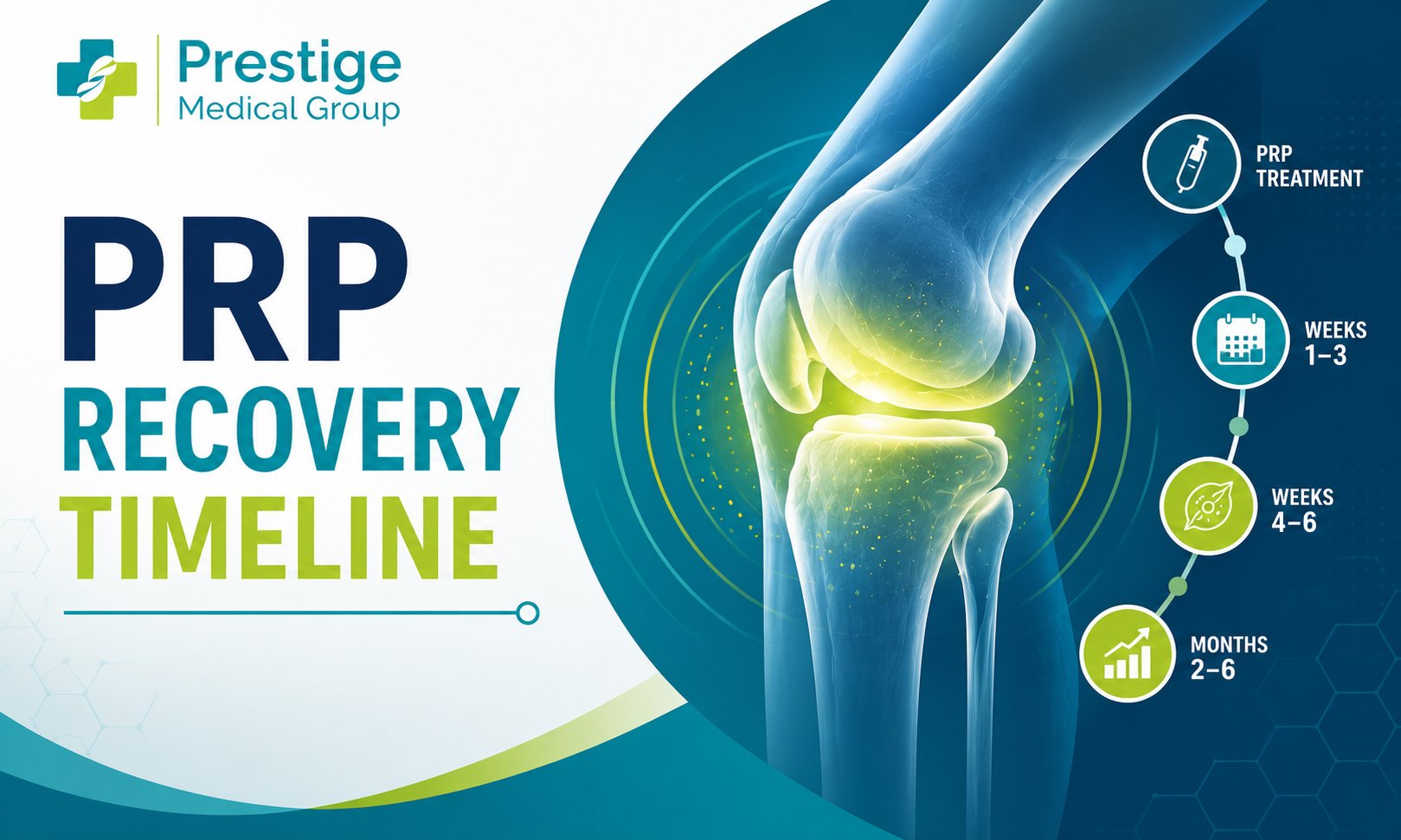
PRP Healing Timeline: What to Expect
Initial Phase (First Few Days)
Mild soreness or swelling may occur as the body begins the healing response. This is a normal part of the regenerative process.
Early Healing Phase (1–3 Weeks)
Patients may start noticing reduced pain and improved movement as tissue repair begins.
Mid-Phase Recovery (4–8 Weeks)
Healing becomes more noticeable, particularly for conditions like tendon injuries and joint inflammation.
Long-Term Healing (2–6 Months)
Collagen production and tissue regeneration continue, leading to sustained improvements.
Research from the National Institutes of Health(opens in a new tab) shows that PRP promotes long-term healing rather than short-term symptom relief.
Factors That Affect PRP Results
- Condition severity: Chronic conditions take longer to heal
- Type of injury: Tendon injuries and joint degeneration respond differently
- Overall health: Healthier patients often experience faster recovery
- Number of treatments: Some cases require multiple sessions
Patients managing long-term conditions often benefit from integrated care through a primary care physician(opens in a new tab) to support both recovery and overall health.
Conditions Commonly Treated with PRP
Joint Pain and Arthritis
PRP helps reduce inflammation and improve function in knees, hips, and shoulders.
Tendon and Ligament Injuries
Conditions such as tennis elbow and rotator cuff injuries respond well to PRP therapy.
Chronic Pain
PRP may be effective when traditional treatments have not provided lasting relief.
Patients often explore conditions PRP therapy can treat(opens in a new tab) to better understand its applications.
Older adults experiencing joint degeneration may benefit from PRP alongside comprehensive geriatric care(opens in a new tab) for improved mobility and long-term support.
What to Expect After PRP Treatment
- Avoid strenuous activity for several days
- Follow aftercare instructions carefully
- Attend follow-ups as recommended
Understanding the PRP recovery timeline(opens in a new tab) can help patients prepare for optimal healing.
Is PRP Therapy Worth It?
PRP therapy is a valuable option for patients seeking non-surgical solutions for pain and injury recovery. It is particularly useful when traditional treatments have not delivered lasting results.
According to Mayo Clinic(opens in a new tab), PRP is increasingly used to treat musculoskeletal conditions and support healing.
Patients often review PRP therapy benefits and risks(opens in a new tab) before deciding on treatment.
Why Choose Prestige Medical Group for PRP Therapy?
Prestige Medical Group offers physician-guided PRP therapy tailored to each patient’s condition and goals. With accessible care across multiple North Georgia locations, patients receive personalized treatment focused on long-term recovery and improved function.
Start Your PRP Therapy Journey Today
If you are dealing with joint pain, injury, or chronic inflammation, PRP therapy may provide a non-surgical path to recovery.
Schedule your consultation today to explore personalized PRP therapy near you(opens in a new tab) and begin your recovery journey.
Start your journey(opens in a new tab)
Frequently Asked Questions
How long does PRP therapy take to work?
Most patients begin seeing improvement within a few weeks, with continued healing over several months.
How long do PRP results last?
Results can last several months to over a year depending on the condition and treatment plan.
Is PRP therapy painful?
PRP therapy may cause mild discomfort, but it is generally well tolerated by most patients.
How many PRP sessions are needed?
Some patients require one session, while others may need multiple treatments for optimal results.
Is PRP therapy safe?
PRP therapy is generally considered safe when performed by qualified medical professionals.
